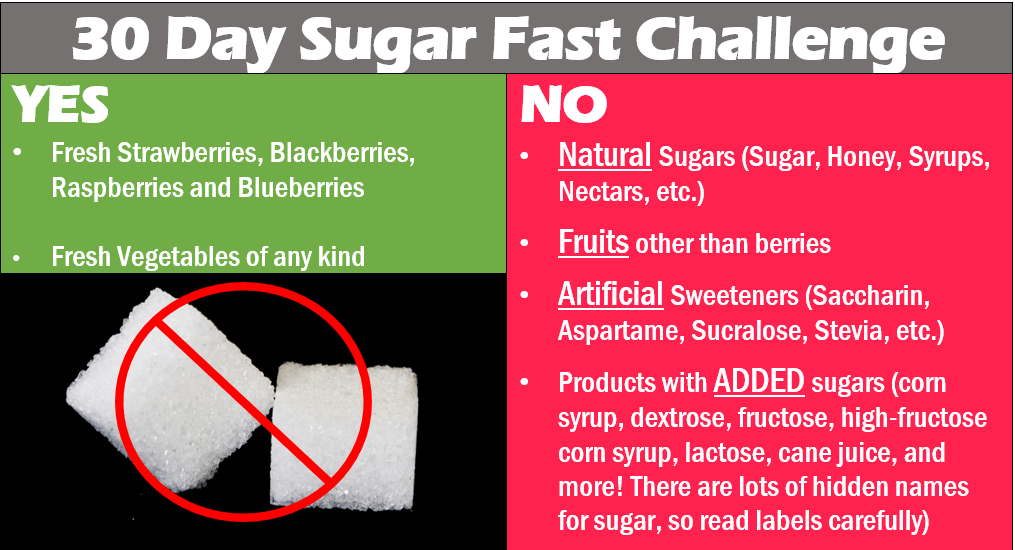
With so much conflicting health advise out there, there at least one thing that pretty much everyone agrees on. Think of just a few of the popular diet lifestyles out there: Plant-based, Keto, Paleo, Vegan, Carnivore, Dairy-free, Gluten-free, Intermittent Fasting, and the list goes on and on. Advocates of these diets will argue tooth and nail that their way is better, BUT there is ONE common denominator in all of these camps: Eliminate Sugar!
Maybe I should clarify, everyone agrees that we should eliminate table sugar and high-fructose corn syrup. Yup, no argument there. But when it comes to other forms of sugar: Natural Fruit, Stevia, Honey, Monk Fruit Sweetener, etc., well that’s a different story. Folks will argue that these forms of sugar are not bad. They are naturally occurring, so they aren’t harmful, right? Unfortunately, I have to disagree and I only need one word to explain why: Addiction!
There, I said it, our western diet has us completely addicted to sugar and the taste of sweetness (more about this later). I do not use that word lightly. Addiction is a real and powerful stronghold and I would guess that it would be hard to meet someone whose life has remained untouched in any way by the problem.
“If, when you honestly want to, you find you cannot quit entirely, or if when drinking, you have little control over the amount you take, you are probably alcoholic”.
Alcoholics Anonymous Big Book
Read the above excerpt but replace the “drinking” with “taking in sugar” and replace “alcoholic” with “sugar addict”. How does that resonate with you? Consider another quote made famous by AA: “One is too many, and a thousand is not enough”. If you think about this from a sugar standpoint, can you relate to that at all? Still not convinced that we are battling a sugar addition? How about the fact that studies have shown that sugar triggers the release of dopamine in the nucleus accumbens — the same area of the brain implicated in response to heroin and cocaine.
So how do we beat this addiction? Just like any other addition, we have to go through a detox process. It’s not fun and it’s the worst part of the healing journey. But it has to be done, we have to completely avoid anything with a sweet taste for at least 30 days.
I have to say “the sweet taste” instead of “sugar” because studies have shown that it is the actual taste of sweetness that creates an insulin response in the body. That means that there are pieces of our anatomy that reacts the same way to artificial sweeteners, fruits, honey, syrups and nectars as it does to straight up white granulated sugar.
If we were talking about beating an alcohol addiction, you wouldn’t suggest that the alcoholic needed to avoid hard liquor but a light beer or something with a low alcohol content would be OK. We can all see how that is not helping the problem. But we have a much harder time with that when we’re talking about our own sugar addiction.
Another analogy comes from another powerful addictive habit: smoking. If someone said to you, “I’m going to stop smoking cigarettes and I’m going to switch to vaping to make the transition easier”, would you think that was a good idea? If you were being a good friend to that person, you would lovingly point out the fact that replacing one bad habit with a slightly less bad habit is not the way to beat the habit. It’s the same thing with beating a sugar addiction. I can’t in good faith advise you to cut out white sugar, but say that other forms of sugar are OK because they aren’t as bad. You’ve just got to bite the bullet for 30 days and do it. You can do anything for 30 days.
I know what you are thinking. But what about fruit? How can fruit be bad for me? God created fruit, it must be meant to be a part of our human diet, right? My answer: yes and no.
Fruit is nature’s candy. It’s the dessert and sweet treat we are meant to be having. However, fruit is not meant to be a part of daily living, 365 days a year. If we were living in biblical times, we would have access to one type of fruit, one or two months out of the year only. Compare that to today’s artificial environments and manufacturing processes and we have access to all kinds of fruits, year-round and when you really think about it, that’s actually a little disturbing. Take apples for example. Apples ripen during a very short period in the United States (between August and September), so keeping them in stores the rest of the year requires that the apples be treated with chemicals and kept in cold storage. One study estimates that the apples at your local supermarket are, on average, 14 months old. Yuck!
I’m not suggesting that we should all cut fruit from our diet indefinitely. I’m only suggesting that we each cut it out for 30 days while our body detoxifies from sugar. That’s all. After 30 days, have as many year old apples as you like 🙂
Just like with any other addiction, you are going to experience withdrawal symptoms when you stop taking in the substance. It’s important to know what those symptoms are so that when you experience them, you can identify it as a temporary problem and push through. Don’t give up because of these symptoms, you don’t want to have to start all over.
- Intensified Cravings for sweets and starchy carbohydrates
- Depression
- Anxiety
- Nervousness
- Restlessness
- Irritability
- Less patience than usual or on edge
- Changes in sleep patterns
- Trouble concentrating
- Forgetfulness
- Light-headedness and dizziness
- Nausea
- Tingling
- Fatigue
- Headaches
The most ironic part of all of this is that those withdrawal symptoms are also the exact same symptoms you will likely be experiencing if you have too much sugar intake. But once the detoxification process is complete, these symptoms should disappear or at least be greatly improved.
If you enjoyed, this article, please consider subscribing to my blog and/or joining the Facebook group.
Blessings,
Ronni
 Restore Your Temple